Document Checklist to Study in Malaysia from Bangladesh
January 20, 2026
Document requirements in Malaysia are not “one checklist for everything.” They change based on (1) which step you are in…


This article is written for Bangladeshi students and parents who are planning higher studies in Malaysia and are asking a very practical question: “Can a student do part-time work in Malaysia?”
For many Bangladeshi families, especially middle-income households, sending monthly living expenses can feel like a continuous burden. Because of this pressure, it has become common for students to look for part-time work to cover at least food, transport, and basic daily needs. The challenge is that the legal rules and the real-life practice are not always aligned. Understanding both sides helps families make safer decisions.
Malaysia does allow part-time work for international students, but it is limited and controlled. In general terms, the legal framework works like this:
Working hours:
International students are typically allowed to work up to 20 hours per week, but usually only during semester breaks or holidays longer than 7 days. In most cases, regular semester weeks are not treated as an “open” work period.
Approval requirement:
Part-time work is not a casual “start anytime” option. Students are expected to obtain permission through the university and immigration procedures before starting. Universities often have their own international office guidelines, and they can advise what is safe and acceptable for a student pass holder.
Scope of jobs (permitted sectors):
The commonly stated permitted sectors tend to be limited to service and hospitality-related areas such as restaurants, some hotel roles, petrol kiosks, and mini markets. Even within these sectors, there can be role restrictions. For example, certain job types (like cashier duties) are often treated as restricted or risky, depending on enforcement practices and interpretation.
The most important takeaway from the official side:
Malaysia’s student pass is primarily meant for study. Part-time work is treated as a limited privilege, not a guaranteed right. That is why families should avoid building a full financial plan that depends on weekly income during academic semesters. Even when students work legally, part-time earnings are generally more suitable for supporting small living costs, not paying tuition.
Now, here is the reality that many students and families quietly face.
Because living expenses add up month after month, a large number of Bangladeshi students try to work even when their semester is ongoing. Some students work after classes on weekdays, and some work multiple days every week. This trend exists even though students understand there are restrictions, simply because the financial pressure feels immediate.
Common part-time job scopes students usually take
Based on what is commonly seen in student communities, these are frequent job categories:
Some of these may overlap with allowed sectors, but the key issue is timing (working during semester) and permission (working without approval). That is where the risk becomes serious.
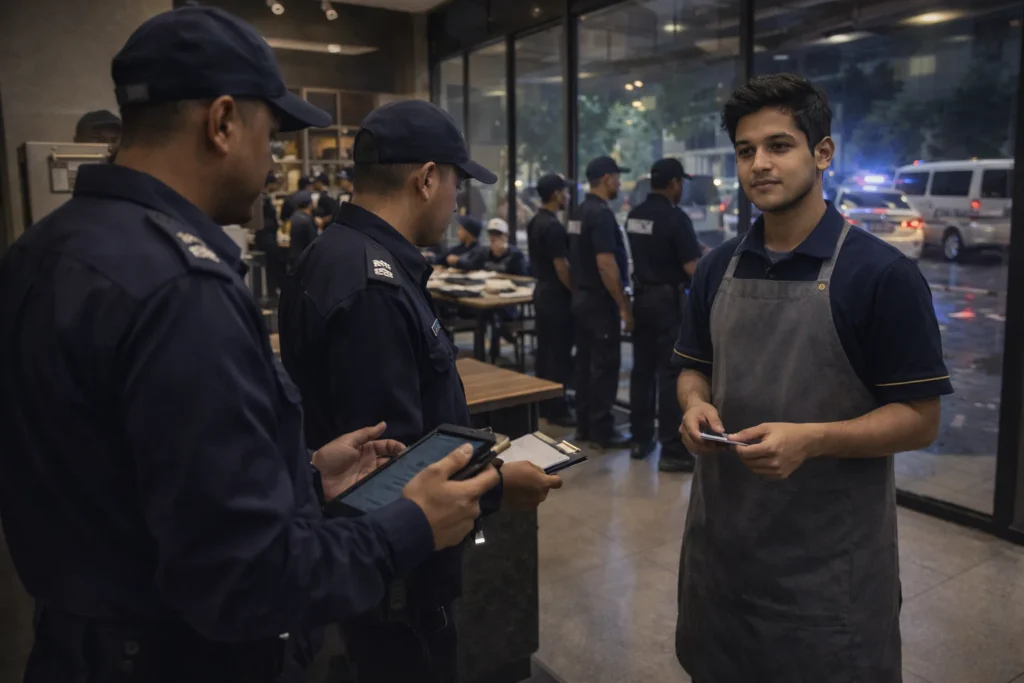
Immigration enforcement sometimes conducts raids on workplaces to identify illegal immigrants or unauthorized workers. If a student happens to be working at a place during a raid, the student may be taken into immigration custody for verification.
In this situation, the student is given a chance to contact family and the university to show legal student documents. However, if the student is found to be working illegally (meaning without proper permission or outside allowed conditions), consequences may follow.
From real-world cases shared within student circles, outcomes may include:
The exact outcome usually depends on the case details and how quickly legitimate support documents and institutional responses are arranged. The safest point to understand is this: even one “normal” part-time shift can turn into a high-cost emergency if enforcement occurs.
A critical note: students should not rely on informal “shortcuts” or third-party negotiation practices. The safest route is always official—through the university and the proper immigration/legal process.
It is understandable why Bangladeshi students want part-time work. For many families, sending monthly living cost feels heavy, and students naturally want independence and dignity. At the same time, Malaysia’s immigration system treats violations seriously, and the financial and emotional cost of one enforcement case can be far greater than the small monthly savings from working illegally.
A safer mindset is this: plan Malaysia with a realistic budget first, then treat part-time work as a secondary support only if it can be done legally and safely. If the long-term goal is education, protecting the student pass must come first.
From a ground-level perspective, it would be beneficial if authorities allowed a more practical option such as at least 20 hours per week during semesters as well, because that would help students cover basic living costs legally. Until anything changes, students and parents should stay cautious, informed, and prepared.
Still have questions?
Click the WhatsApp icon and share what’s on your mind. Sometimes the best guidance starts with one simple question.